Texas Passes Artificial Intelligence Bill

Under a new Texas law, employers may not develop or deploy an artificial intelligence system with the intent to unlawfully discriminate against a protected class in violation of state or federal law. “Protected class” means a group or class of ... Read More

Colorado Anti-Discrimination Act Provides Protections Based on Employee’s “Chosen Name”

Effective immediately, the Colorado Anti-Discrimination Act (CADA) has been updated to include an employee’s “chosen name” as part of the definition of “gender expression,” which is a protected class under the CADA. “Gender expression” is now defined as an individual’s ... Read More

Florida Loosens Restrictions on Noncompete Agreements for Highly Paid Employees

Effective immediately, Florida has passed the CHOICE Act, which allows employers to enforce robust restrictive covenants against certain highly compensated employees. The Act concerns “garden leave agreements” and “noncompete agreements.” “Garden leave agreement” means a written agreement, or part of ... Read More

California Develops Model Employee Notice for “Survivors of Violence and Family Members of Victims Right to Leave and Accommodations”

As you know, last year, California expanded the rights to leave and accommodations for employees who are a victim of violence or the family member of a victim of violence. Employers are required to provide employees a “Survivors of Violence ... Read More

Delaware Passes Employee Background Check Bill

Effective immediately, Delaware has expanded the state’s statute for obtaining criminal background checks from just employees and contractors within the Department of Labor, Division of Unemployment Insurance who have access to federal tax information, to all new hires, transfers, promotions, ... Read More


New Hampshire Requires Monthly Workplace Violence Reports for Health Facilities

Under New Hampshire law, health facilities are required implement and maintain a workplace violence prevention program. Currently, each health facility must prepare and submit to the state’s Health Care Workplace Safety Commission an annual report containing all workplace violence and ... Read More

Maine Increases Minimum Wage for Agricultural Workers

Beginning January 1, 2026, agricultural workers in Maine will be subject to the a new minimum hourly wage. The minimum hourly wage will be $14.65 per hour (increased by any cost of living increases). Previously, agricultural workers were exempt from the ... Read More

Rhode Island Requires Employers to Provide Reasonable Accommodations for Menopause

Effective immediately, New Hampshire has updated and expanded the state’s current “Fair Employment Practices” statute pertaining to pregnancy accommodations to include menopause and menopause-related conditions. It is now an unfair employment practice for an employer to refuse to reasonably accommodate ... Read More

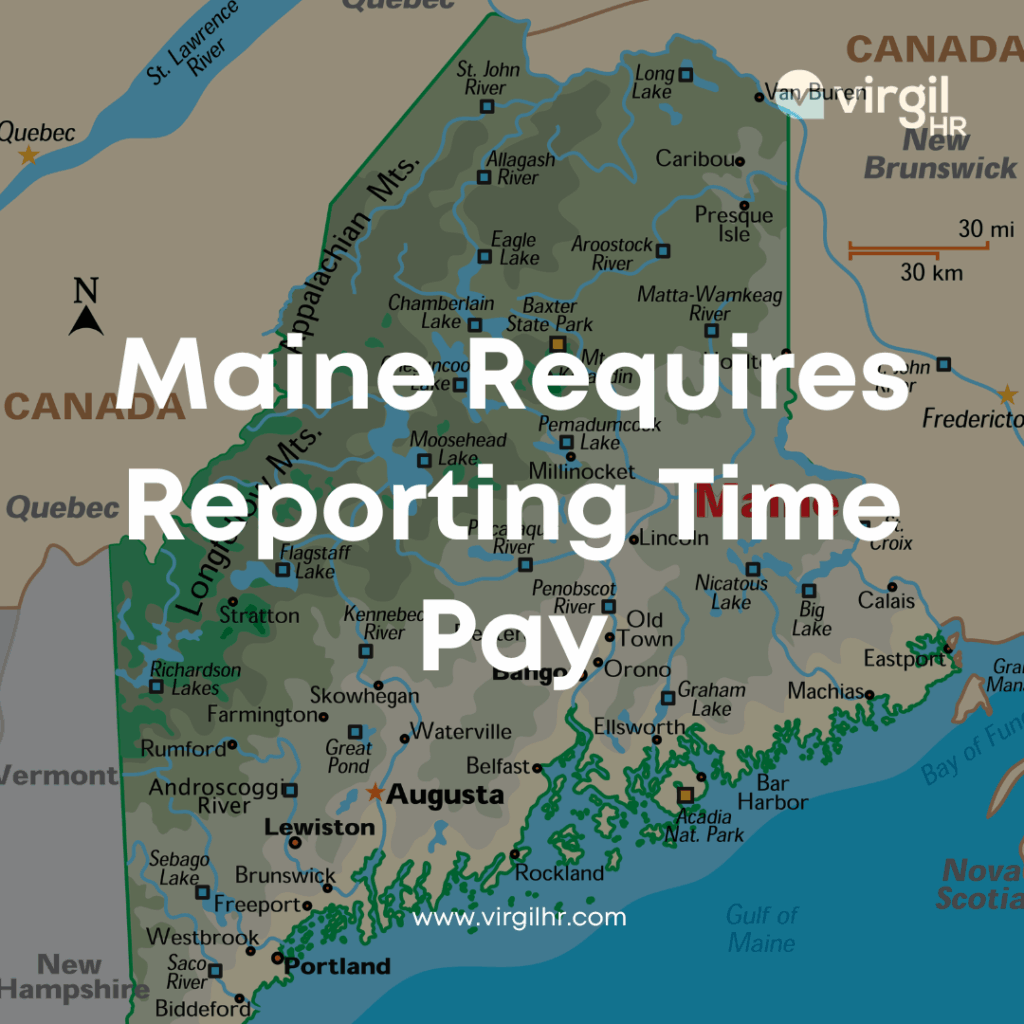
Maine Requires Reporting Time Pay

Maine has passed “reporting time pay” requirements for employers with at least 10 employees in the usual and regular course of business for more than 120 days in a calendar year. On any day an employee reports to work at ... Read More

Striking Oregon Employees Eligible for Unemployment Benefits

Oregon has passed a new law that makes workers on strike eligible for unemployment benefits. Specifically, after the first week on strike, striking employees are now eligible for up to 10 weeks of unemployment benefits. Employees on a “lockout” are also eligible ... Read More

Changes to the Washington Cares Fund Expand Long-Term Care Support

Recently, Washington state lawmakers signed a new law expanding Washingtonians’ options for accessing long-term care support through the WA Cares Fund. The law creates opportunities for Washingtonians to purchase affordable supplemental long-term care coverage from private insurers in the future, allows workers ... Read More

Pittsburgh Expands Paid Sick Days Act

Pittsburgh has amended the city’s Paid Sick Days Act to provide for faster accrual and increased paid sick leave hours. The amended law will go into effect January 1, 2026. You can monitor these changes on the city’s web page.

... Read More